

Dust and Odour Control in Waste Processing Using Misting Systems
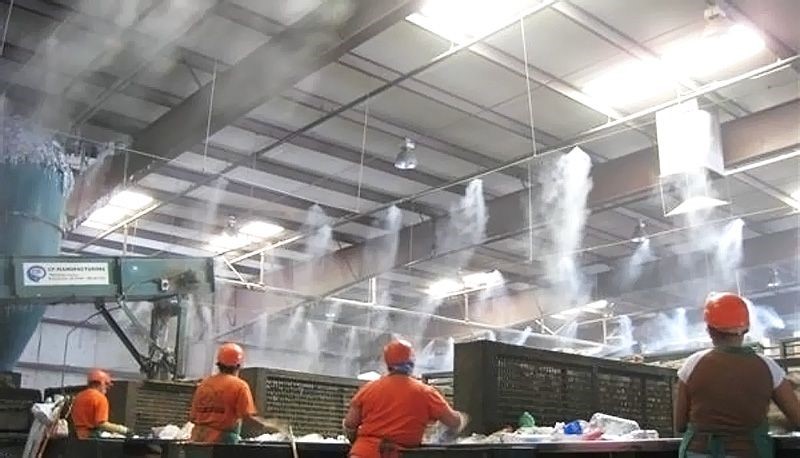
Suppressing dust and unpleasant gases with misting systems during the processing and sorting of rubbish and solid waste is an essential solution today. Dust is generated during disposal, transfer, unloading, crushing and other operations involved in processing household and industrial waste.
All waste processing operations generate large amounts of harmful dust and gases resulting from decomposition, leading to a critical deterioration in the sanitary condition of the surrounding environment. As a result, staff productivity declines and workers may develop occupational diseases.
Removing dust and unpleasant odours from the air is a technological requirement in operations such as processing construction waste, wastepaper, plastics and polyethylene, solid industrial waste, glass, household rubbish and other waste materials.
We all know that the most unpleasant smells occur at landfills and waste processing plants. People who live near these facilities know firsthand just how unbearable the odour can become. This damages their quality of life, undermines their health and leads to numerous complaints against businesses, accompanied by disputes and negative media coverage.
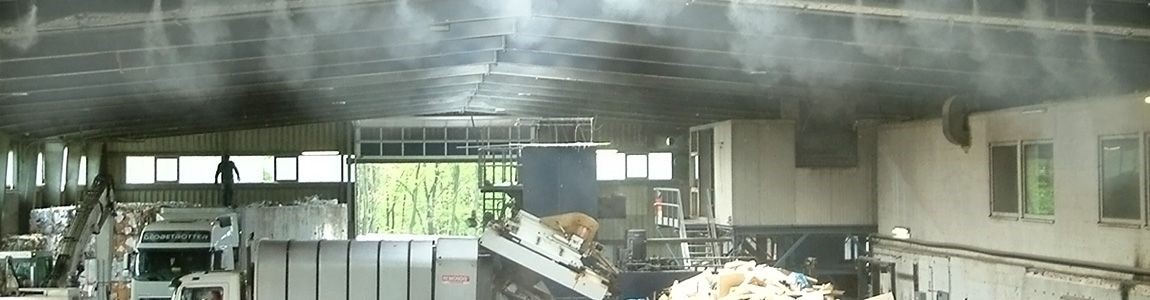
High-pressure water mist generation systems are the most cost-effective and, one might say, virtually the only way to combat dust and gases released into the atmosphere.
This dust and odour control method is based on spraying water. Today, it has become not only the most effective approach from an environmental perspective but also the only possible solution. This is because conventional extraction systems are not designed to operate in open spaces or buildings with a constant inflow of outdoor air.
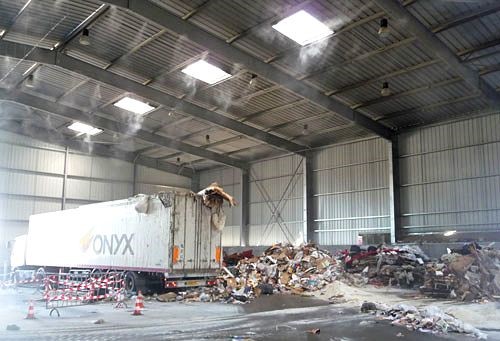
From a technical perspective, misting systems are designed to operate in precisely defined locations with maximum efficiency. The direction of the sprayed particles, whether clean water or water containing additives, can be adjusted in terms of range and coverage radius. It is particularly important to position the nozzles at optimal distances from one another so that no blind spots or uncovered areas remain. Unlike cooling applications, odour elimination requires complete coverage of the perimeter. This is necessary because the weight of the tiny water droplets causes odour-producing molecules to settle on the ground or other surfaces.
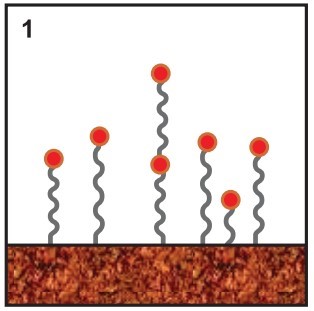
ODOUR CONTROL PROCESS
- Odours in the surrounding environment caused by chemical or biological processes.
- Millions of ultra-fine droplets are sprayed into the surrounding environment.
- Droplets of neutralising agent gather around odorous gases, eliminating the smell.
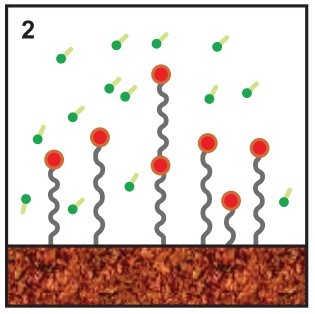
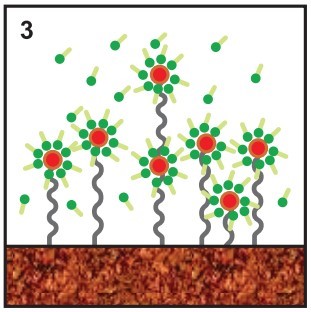
In addition to their mechanical action, special substances can be added to the water to neutralise unpleasant odours. In this case, the system can operate intermittently rather than continuously. Chemical solutions are not necessarily required for these purposes: natural aromatic oils are highly effective due to their antiseptic and antiparasitic properties. Their strong scent repels pests and effectively combats unpleasant odours. At the same time, the smell of tea tree, pine or eucalyptus is neither harmful nor unpleasant to humans.
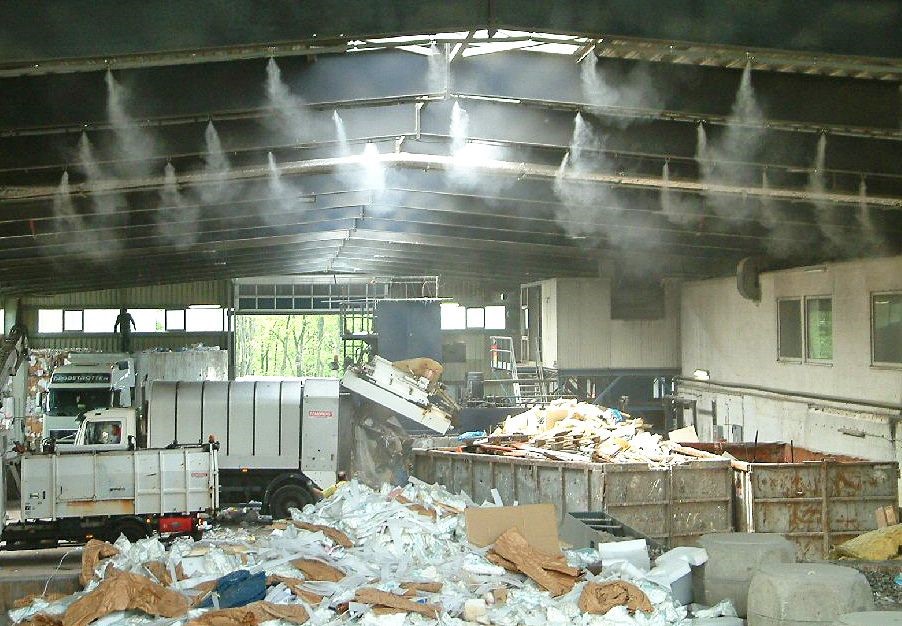
Installing misting systems at waste processing facilities addresses the following objectives:
- Reduction of harmful dust and exposure to gases. This is achieved through the dust suppression effect of the systems, which capture airborne dust particles and other substances.
- Increased productivity. Staff performance improves, while the incidence of illnesses caused by harmful working conditions decreases.
- A healthier working atmosphere. Fatigue decreases, alertness increases and the risk of workplace injuries caused by high concentrations of dust and gases in the air is reduced.
- Humidified air contributes to healthier mucous membranes and stronger immunity among workers.
- A cost-effective solution compared with industrial extraction systems. It makes it possible to control dust sources locally during processing operations.
- Improved profitability. Higher revenue through optimised production processes and lower expenditure on environmental fines.

An advantage of using misting systems is their low cost compared with other odour suppression systems. This method also features low energy consumption and simple, rapid installation, since systems are supplied in various configurations or fully assembled with easy-to-install connections.
A misting system operates quite simply. Water is delivered under pressure through special pipes to spray nozzles, where it is atomised. The operating pressure is usually between 70 and 100 bar, and the water droplets leaving the nozzles measure 5–10 microns, several times smaller than the thickness of a human hair. Each nozzle has a coverage radius of 1.5–2 metres, so the nozzles should be installed at these intervals around the entire perimeter of the area.

A high-pressure misting system consists of the following components:
- High-pressure pump;
- High-pressure hose system;
- Fine misting nozzles;
- Fittings;
- Water filters installed on the supply line;
- Fan for dispersing the mist (if required);
- Misting system control unit;
- High-pressure ball valves;
- Drain valve to prevent stagnant water;
- Mounting clamps and other components according to the project specifications.
Dust suppression systems based on mist generation are indispensable for processing, storing and sorting rubbish and household waste. Mist-spraying solutions suppress dust and odours generated during the processing of industrial and solid waste, improving the regional environment and worker productivity.