


Why buy from us?
Lorem Ipsum is simply dummy text of the printing and typesetting industry.
Ask a Question About This Product
- Availability: 99
- Brand: Vents
- Model: 9424
- Weight: 50.00kg
- UPC: 9424
- JAN: 1580


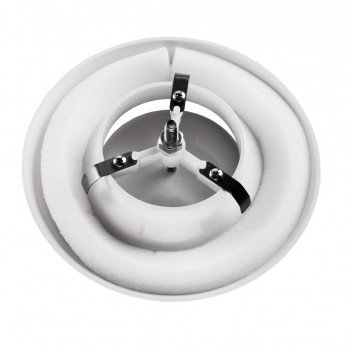
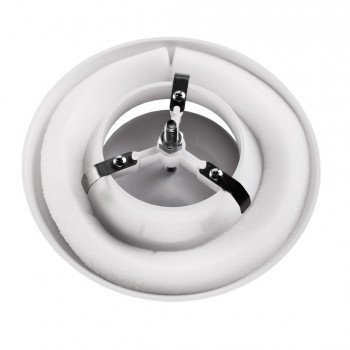
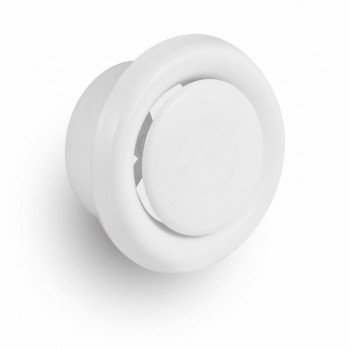
Anemostat Vents A 200 VR is designed for air distribution from supply and exhaust systems. It is installed in the ceiling of the room or, more rarely, in the wall. A distinctive feature of the anemostat is the ability to regulate the amount of air that passes through it. This is accomplished by rotating the central part of the anemostat around its axis.
What is it made of
Material - ABS plastic, which is characterized by the following properties: impact resistance, non-toxicity, wide temperature range from - 40°C to + 55°C, ultraviolet resistance, increased durability
How to mount
Mounted using spacer mounting plates, so-called legs, attached to the body with screws. For a good fit to the ceiling surface, the inner 'invisible' part of the anemostat is filled with a sealant.
Dimensions

| D | D1 < /td> | D2 | D3 | Hmax | H1 | H2 | |
| Size, mm | 200 | 178 | 128 | 246 | 80 | 53 | 33 |
Air flow and pressure loss of anemostat A 200 BP

How to use the chart? The graph displays the pressure loss on the anemostat at a certain gap S (mm) between the central part of the anemostat and the valve seat.

Oblique lines indicate this valueSin mm. For example, with a gap of S=2 mm and an air flow of 50 cubic meters. per hour the pressure loss will be 1 Pa. Another example: with a gap of 12 mm and an air flow of 110 cubic meters. per hour the pressure loss will be 3 Pa.